Ecommerce SEO remains one of the most profitable and resilient niches in digital marketing, given that it sits at the direct intersection of search traffic and transactional value.
Learning how to leverage SEO for eCommerce brands is an understatement for many ─ mastering how to build backlinks for eCommerce (eCommerce link building services), for instance, is no longer a differentiator; it’s the bare minimum (but many are still in the trenches of finding high-quality link opportunities for their brands).
Most online stores are stuck in the cycle of guest posting on low-tier blogs or simply chasing “no-follow” social mentions that do little to move the needle on their organic rankings.
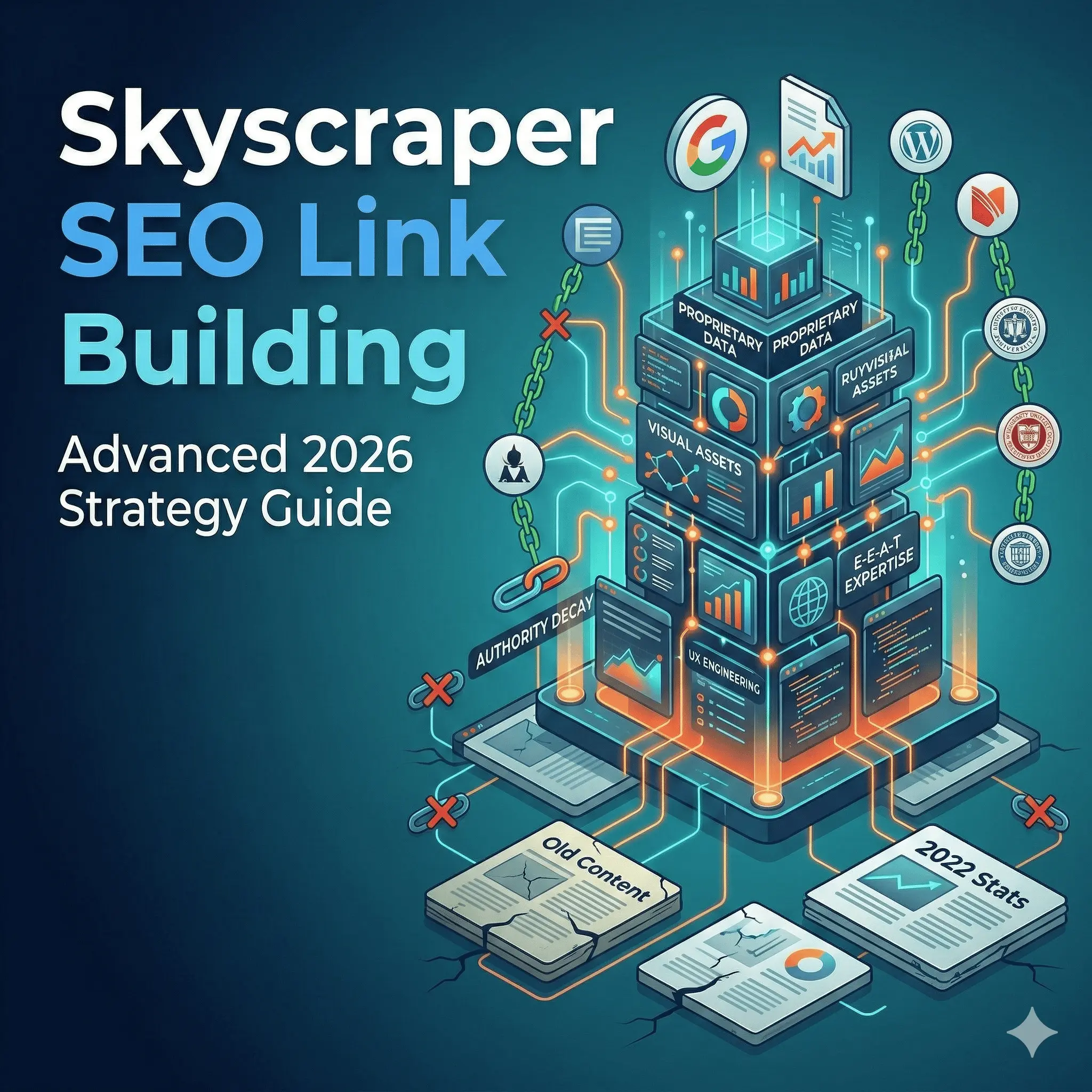
If you really want to dominate your niche in 2026, you need to transition from just link chasing to authority building with your link building campaigns.
Table of Contents
ToggleStart Building Your Ecommerce Link Building Foundation
You need to architect authority if you want to go ahead in your competition. For instance, learning to look beyond just Domain Rating (DR) (which is a vanity metric) and start looking at it from the perspective of a fueling source for your specific revenue-generating pages is a game-changer in your SEO campaign.
1. Master the Link Equity Mindset – Optimizing for Relevance and Authority Formula
Quality beats quantity. Relevance is the multiplier in link building. If the relevance score is zero, the total value of the link drops significantly, regardless of how authoritative the website is.
One insight I’d like to give you is that a DR30 link from a hyper-relevant website often gives more ranking juice for specific product keywords than a simple DR80+ link from a generic news conglomerate. So in essence, you aren’t just looking for link juice, you’re actually looking for topical seed sites — these are websites that Google already trusts as experts in your specific niche.
2. Hybrid Approach – Balancing Brand vs. Commercial Intent
One of the major mistakes of eCommerce brands is that they’re building 90% of their backlinks to the homepage — creating a top-heavy website where your homepage just ranks for the brand name, but the men’s leather boots (let’s say for a product category page) are nowhere to be found.
You can utilize the tri-tier backlink distribution:
- Top tier – target homepage links to help increase your site’s overall trust and EEAT (e.g., press releases, brand mentions, interviews, etc).
- Middle tier – target blog or resources backlinks, which will serve as your link magnets to help you earn high-volume backlinks naturally (e.g., reviews, gift guides, comparison content, etc).
- Bottom tier – target category and product pages that are money links, directly improving your website rankings for transactional keywords.
You can use the middle tier to catch the backlinks, then use an aggressive internal linking strategy to funnel the link equity down to the bottom tier (commercial pages) — this helps mimic a natural website architecture while feeding ranking power to the pages that actually checkout customers.
3. Competitor Gap Analysis – “Low-Hanging Fruit” vs. “Exclusive Moats”
If you want to beat your industry’s established players, you need to know exactly how they build and establish their backlink profile. So the advanced gap analysis can categorize competitor links into two buckets:
The first is the low-hanging fruit (replicable), which are links your competitors have acquired that you can too. Examples would be resource pages, guest posts, and brand mentions.
The second type of links is what we call “exclusive moats”, which are links that make your competitors untouchable — usually they are earned links, not just built. Examples would be proprietary data, deep integrations, and legacy PR campaigns.
Advanced Outreach Tactics for High-Growth Ecommerce Brands
Once your link building strategy is set, the next thing to do is to build an automated or structured system that will help generate and distribute authority without your constant manual begging in outreach.
1. Deploy Passive Link Magnets
You need to become a primary source that journalists and high-tier bloggers look for – particularly in data to back up their claims. So if you provide the data, they will provide you with a citation.
Examples of passive link magnets are:
- State of the Industry Report – survey your customer base or scrape your public data to create a proprietary report.
- Calculator moat – you can build a functional tool that can become a go-to resource for your niche.
Here’s an actionable move you can take: identify the most cited statistics in your industry using tools like Ahrefs or SEMRush. So if your current source is from 2022, you can create a 2026 updated version. You can reach out to everyone who has linked to the old data and show them your fresh, more accurate study.
2. Implement “Middleman Method”
It is nearly impossible for an eCommerce site to have a high-authority news site link directly to a product page. But given that they can link to high-value informational content or guide.
One way to implement a strong link building strategy is to build first high-authority links to your middleman (your blog post or informational content). Then, you can place a high-visibility, conversion-optimized link within that post to your product or category page.
Then, you can use descriptive, keyword-rich anchor text internally, given that Google is much more lenient with internal anchor text than external.
You can audit your site’s top pages using the links report. Then, identify any high-authority blog post that doesn’t currently link to a product page. Next is to add a “Shop the Look” or “Recommended Tools” section to those pages immediately to bleed the authority down to your money pages.
3. Use Advanced Search Operators to Find Unlinked Brand Mentions
As your eCommerce brand grows, it’s a good thing to see that people will naturally talk about you. And more often than not, they will mention your brand name or your products, but will forget to include a clickable link. This could be considered an accidental PR that you need to convert into SEO power.
You can use Google search operators to find unlinked brand mentions (e.g., “brand name” -site:yourbrand.com -site:X.com -site:facebook.com). Set up tools to help you further, and AlertMouse to notify you the moment your brand has been mentioned anywhere on the web.
High-Level Creative Link Building Campaigns for Ecommerce Brands
If at any moment you scale your outreach campaigns, you can now reach the next level – “High-Level Creative” stage, where you are no longer just building backlinks, but you are building a brand presence. These creative link building campaigns require more than just coordination, but offer certainly the highest ROI possible given that they generate both SEO equity and direct referral sales.
Here’s a deep dive into the high-level creative campaigns:
1. Dominate Seasonal Gift Guides and “Best of” Lists
Most eCommerce brands just wait for editors to find them. When you utilize the advanced “Blitz”, as we call it internally, you flip the script by synchronizing your outreach 3 to 6 months ahead of peak shopping seasons (including Black Friday, Mother’s Day, etc).
Start with multi-tier outreach — this is where you coordinate a simultaneous “shout-out” from 20 to 30 micro-influencers and niche editors — creating a cluster effect that will signal to Google that your brand is the trending authority in that category.
Another strategic move to make is offering a unique time-sensitive discount code for your readers — incentivizing editors to include you, given that it adds tremendous value to their audience, and it helps increase their own click-through rates.
You can semi-automate outreach prospecting by using tools like Hunter.io to find “gift guide” editors at major lifestyle publications. You can pitch them a bundle idea, just don’t pitch your product.
2. Exploit Visual Gaps on High-Authority Domains
This, I considered to be one of the most underutilized ninja tactics in eCommerce link building. High-DR websites often have old articles with broken product images — due to deleted URLs or expired CDNs). Remember that a broken image is a major UX red flag.
The value proposition here is that you offer a high-definition, professional replacement image for free, in exchange for a simple image source attribution link. Here, you can use broken link checkers specifically on high-authority sites or news outlets and look for any 404 errors on image files.
3. Scale Authority through Non-Competing Brand Partnerships
In every industry, we know that there are complementary brands. So let’s say you sell high-end coffee beans, you aren’t competing with a company that sells premium espresso machines — you are serving that exact same customer.
The key here is content collaboration, where you can co-author a guide (e.g., “Definitive Guide to the Perfect Home Brew”), and host half on your site and half on theirs.
When you partner with an established brand in your related space, you actually borrow their trust. So when their high-authority site links to yours, it tells Google you are part of the same elite ecosystem.
Start this when you identify 5 to 10 brands that actually share your customer persona but sell different products. You can propose, let’s say, a joint resource study or a co-branded giveaway, where both parties can promote the landing page — helping you earn niche relevant backlinks from a domain that’s already vetted by your target audience.
Final Thoughts
The true challenge in eCommerce link building is securing backlinks that your competitors can’t easily buy or build. So if you are ready to stop chasing vanity metrics and start to really architect a high-performance backlink profile that drives actual revenue, it’s time to pivot your strategy now.
Ready to stop the manual grind and scale your store’s authority. Partner with our experts at Link Building Services IO by SharpRocket to deploy these advanced frameworks for your brand today.
Written By

Venchito Tampon
Founder of Link Building Services IO and CEO and Co-Founder at SharpRocket, a link building agency. With a decade of experience, Venchito has a proven track record of leading hundreds of successful SEO (link builidng) campaigns across competitive industries like finance, B2B, legal, and SaaS. His expert advice as a link building expert has been featured in renowned publications such as Semrush, Ahrefs, Huffington Post and Forbes. He is also an international SEO spoken and has delivered talks in SEO Zraz, Asia Pacific Affiliate Summit in Singapore, and Search Marketing Summit in Sydney, Australia.
Reviewed By

Sef Gojo Cruz
COO at SharpRocket, overseeing end-to-end operations, from crafting link building strategies to leading high-performing teams. Previously led SEO initiatives at Workhouse, a digital agency in Australia, and Keymedia, a real estate media company based in New Zealand.