Link building isn’t dead ─ it’s just harder to acquire the quality ones. Low-effort strategies don’t deliver results as they did a decade ago.
The most sustainable way to learn how to get backlinks from high authority sites is to transition from a begging strategy of “asking for favors for links” to a strategy of “value-adding” and helpful content creation.
We’ve come a long way in how top-tier publications expect from brands in terms of the content they externally contribute ─ they are now looking for information gain: unique data, expert perspectives, and original research that others haven’t brought to life.
Our guide today walks us through a roadmap for creating your linkable assets and executing professional, value-adding outreach campaigns required to earn elite-level citations.
How to Create Linkable Assets for High Authority Sites
Linkable assets aren’t new, but they have become the foundation for many brands to do passive link building, which most websites have adopted.
Organic link building has also become a core strength of our link building services, as it is more sustainable in nature. It brings more consistent links to our clients ─ and the impact on traffic and rankings of every link increases over time.
Before initiating any outreach, your content must serve as a primary source that editors and publishers feel compelled to cite.
1. Original Data & Proprietary Research
Unique, expert-driven data cuts the noise in the sea of content being published every day in your industry.
Start gathering data using platforms like Pollfish or Wynter from a specific demographic of your choice (collect at least 500 responses and have them validated by an in-house expert in your organization).
Then, release the raw findings as “The [Year] Industry State of [Topic”, many brands in different industries publish a format of this linkable asset every year.
You can also do data mining by aggregating public datasets from Census, Kaggle, or industry-specific APIs to uncover new trends or correlations that journalists and other publishers might find interesting.
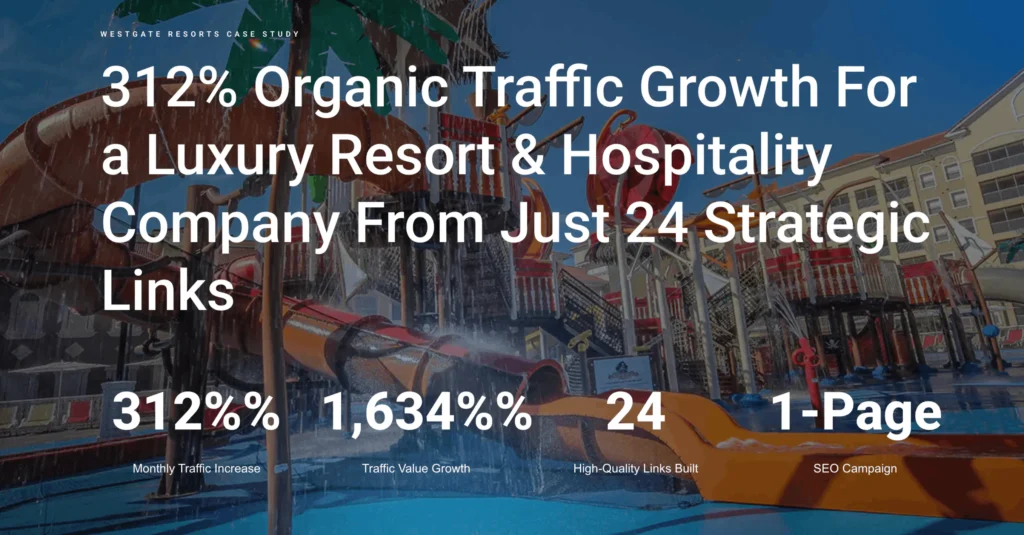
Another solid original data source is case studies, where you document a specific process with “before and after” metrics. And by showing concrete results (in the form of $ or %), you get highly citable by journalists looking for proof points or a story to prove a point in their upcoming write-ups.
2. High-Utility Assets (Skyscraper 2.0)
You can also move beyond static text by creating functional resources that businesses actually use to make their operations efficient. High-authority websites typically link to these assets because they provide a utility service to their readers that the host site cannot easily replicate.
Here are high-utility assets for many enterprise and SaaS link building campaigns:
- Custom interactive tools and calculators – lightweight, browser-based tools that help individuals or in-house professionals calculate ─ ROI calculators, tax estimators, or project timeline generators ─ they earn links from high DR resource pages of org sites and educational institutions (.edu).
- Embeddable visuals and informational graphics – high-resolution topical infographics, cheatsheets, decision-making matrices, or flowcharts that cover a specific complex regulation or workflow. They earn links by providing an embed code, reducing friction for editors to feature these visuals along with an automatic source link (the hosting website).
- Citable Chart Methodology – raw industry data transformed into simple, branded charts ─ they earn links from journalists searching for visuals to support their claims and/or when used as a reference image in news articles.
- Proprietary comparison frameworks – these are original matrices, e.g., the [industry] maturity model, or Anatomy of.. diagrams ─ actual conceptual frameworks that help standardize industry reference points ─ which get links from publishers linking to your original definitions when discussing the topic.
Sites with high-utility assets are more likely to take advantage of the passive link-building leverage, where they get links naturally generated by an initial outreach campaign.
3. Expert Integration and Collaborative Authority
EEAT-applied processes have been part of many brands’ content strategies today, as Google continuously rewards content that blends expertise and trust.
A couple of tips to make it work for your content creation campaigns:
- Build more EEAT signals – you may include a “Reviewed by” section where you feature credentials and expertise of authors (e.g., a PhD, etc).
- Do a contrarian take on your topic – ask 3 to 5 authority leaders to comment on one of your points (justify, give a thought, or simply provide an actionable tip) ─ instead of doing a generic, crambled round-up post.
- Publish ego-bait content for non-competing brands – take advantage of your brand authority by interviewing thought leaders on non-competing sites/brands who are more likely to link to the published interview from their own Press or Featured in pages.
By publishing more authentic, expert-crafted content, you get high-authority backlinks and user trust ─ both are important for driving topical and brand authority.
How to Find High-Authority Backlink Targets (Data-Driven Link Prospecting)
Link prospecting can be either the initial or secondary phase of link building service providers ─ you can start finding backlink targets before creating suitable content for their sites, or create linkable assets and then match them to link targets based on your content’s targeted audience.
Either of these methods works for high-level backlink prospecting. Fortunately, finding viable link prospects is easier when you have the right metrics to qualify your target domains.
1. Filter Backlink Targets by Topical Relevance and Domain Rating (Ahrefs DR60+)
Use SEO tools like Ahrefs or SEMrush to filter for websites with a DR of 60 or higher (Ahrefs’ Domain Rating is its own metric for calculating domain authority). While DR isn’t an absolute metric, it’s a good score to spend your outreach energy on powerhouse sites that can pass significant link equity, given that Ahrefs uses the quality of referring domains as part of calculation for domain rating of a specific website.
You must also avoid “link neighborhoods” that are irrelevant to your industry. See the target website’s Top Pages to ensure they regularly link out to credible sources in your niche.
2. Hunting for High-Value Resources and Curated Links Pages
Resource page link building (and broken link building for many seasoned SEO professionals) isn’t dead ─ the strategy works effectively for many link builders who know how to strategically find authority .edu, .gov, and other relevant sites with resource pages.
Fortunately, finding resource pages is much easier when you use search operators. Search operators are special commands that you can enter in search bars that filter the SERPs in different ways.
For instance, you can use inurl:resources to quickly find pages that have the word, resources in the URL ─ this can simplify the process of finding resource or links pages that are likely to link to your linkable asset.
A couple of examples of search strings in finding resource pages include:
- [ niche ] + inurl:resources
- [ niche ] + “best sites”
- [ niche ] + “helpful links”
How to Do Digital PR and Newsjacking
Digital PR has risen in demand, as ranking websites for many brands is no longer about the quality of linked websites; even brand mentions without attached links can be a gateway to helping the site gain more visibility in AI-driven search and LLMs.
Mentions and brand coverage on news websites and authority publications are helping sites today associate their brand in a given niche topic.
Here are actionable tips to do digital PR and newsjacking.
1. Leverage Source Platforms For Instant Editorial Placement
You can use platforms like Featured.com, Connectively, and Help a B2B Writer to find and monitor active journalist queries. These writers are usually under tight deadlines, so give them just enough preview of your story, like a 3- to 4-sentence modular quote they can copy and paste directly into their article or news story.
Do credential stacking. Always include a one-sentence authority bio that justifies the credibility of your citable expert or in-house thought leader. You can also mention your proprietary or research data (as discussed earlier) to increase the chances that journalists select your quote.
2. Execute Reactive PR and Strategic Newsjacking
You can use Google Alerts or Exploding Topics to spot real-time trends or breaking news in your industry. By being one of the first publishers to cover a trend or topic, it’ll be much easier for you to gain initial recognition ─ resulting in mentions and links.
Another way to get backlinks from high-authority sites aside from guest posts (publishers and A-list news sites) is to pitch a supplementary resource. Don’t ask them to write about you; offer your content piece as a backgrounder or statistical reference so they can link to it if they want, without having to explain the technical details themselves.
How to Reclaim and Multiply Backlink Equity
Link decay is common across most websites, and for many reasons, link loss can negatively impact a website’s current rankings.
So, learning how to turn unlinked mentions into actual links ─ reclaiming what’s actually yours, and multiplying even more your link profile’s equity ─ can bring your site authority gold at home.
1. Convert Unlinked Brand and Research Mentions
Set up Google Alerts, AlertMouse, or any brand mention tracker tools to monitor mentions about your brand or any title of your linkable asset, especially the ones that you originally published on your website.
Reach out with a gratitude-first angle, encouraging them to link to the actual source (dedicated page on your website).
“I saw you referenced our [Year] Research Study in your recent piece on [Topic]—thank you! Would you mind making that mention a clickable link? It helps your readers find the full dataset for further context.”
Oftentimes, writers will just credit you by name without any hyperlink ─ easy wins in link building, given that the editorial intent to credit you already exists.
2. Do Strategic Image Reclamation and Visual Attribution
Use Google Lens or Tineye to scan the web for any unknowingly use of your custom images ─ infographics, charts, and diagrams ─ where you can get leverage by reaching out to them for link requests.
Instead of basically just sending a legal cease (which means they remove your visual assets on their blogs), you can use this opportunity to include a source attribution link back to the original page, where you host your content asset.
Final Thoughts
Learning how to get backlinks from high authority sites is no longer about finding shortcuts or the latest trends ─ it’s really about establishing a solid brand presence that demands editorial recognition and ultimately getting passive links.
Our SEO team at Link Building Services IO – SharpRocket, we specialize in organic, sustainable link building strategies to help you build long-term brand authority.
Written By

Reviewed By

Sef Gojo Cruz
COO at SharpRocket, overseeing end-to-end operations, from crafting link building strategies to leading high-performing teams. Previously led SEO initiatives at Workhouse, a digital agency in Australia, and Keymedia, a real estate media company based in New Zealand.