Building easy backlinks is one of the foundational strategies for new SEO campaigns looking to establish their initial topical and brand authority, which helps them bridge the gap between their actual content and search demand.
While the term “easy” may imply low effort, the objective is still to acquire high-quality, foundational links that will serve as a springboard for more complex or hard-to-replicate link building campaigns.
This guide explores the top sources of easy backlinks and how to prioritize link opportunities based on prominence and relevance to ensure your website earns a stable spot in Google’s SERPs.
Top 5 Sources for Acquiring Easy Backlinks Today
In 2026, easy backlinks are those that you can acquire through profile creation, direct submission, or personalized outreach, without the time-consuming or complex digital PR campaigns.
These five sources below are truly foundational for establishing initial brand trust with search engines.
1. Social Media Profiles (Foundational Nodes)
Legitimate companies typically have social media profiles, so links from those, by listing your website URL in the bio, About, or Contact info sections of these major social platforms, can help build foundational nodes. These authority sites (as you know) include Facebook, LinkedIn, Twitter (X), Instagram, and TikTok.
Social media links serve as a primary identifier for search engines to verify that your website is the “official” home of a specific brand. Registering on these high-authority domains (social media sites) will provide your site with immediate trust signals before it can earn more difficult editorial links.
The best part is that these links create a baseline digital footprint, making it easier for search engine crawlers to discover and index your root domain. It also helps AI models associate your brand name with industry-specific categories and topics.
Actionable tips to get and maximize link value from social media profiles:
- Be consistent. Make sure your brand name and description are written consistently across all your social platforms.
- Set profiles to “Public” so that search engine bots would follow the links back to your website.
- Fill out every available field in your social profile – a complete profile is viewed as more authoritative than a sparse one.
2. Business Directories (Citations or NAP)
Business directories are a cornerstone of effective link-building campaigns, particularly for those looking to expand their digital footprint in specific geographic locations. These directories are listed on trusted national, local, or niche-specific platforms like Yelp, G2, Yellow Pages, and the Better Business Bureau. They act as digital repositories for company information, enabling users to find and review services.
Business directories also serve as “vouching” mechanisms that signal to both users and search engines that your brand is legitimate.
Search engines use brand mentions and your business’s profiles across directories to verify that your business actually exists at a specific location. When NAP data is identical across dozens of directories, it’s easy for your website to gain ranking confidence for localized queries.
How to maximize backlink value from business directories:
- Create a standard format for directories by only choosing a specific way of writing your address and use it everywhere – for instance, using “Street” vs “St.”
- Prioritize directories that are relevant to your niche (i.e., lawyer directories if you’re a law firm) carries more topical value than a generic one.
- Continuously update your listings to keep your information current, especially after a change to your contact details.
3. Resource Page Link Building (The “Ask” Method)
Resource page link building is the second-best link building strategy way back when I started my SEO career in 2013 – it’s a highly targeted outreach strategy that capitalizes on the existing intent of webmasters for a page to provide a collection of useful resources to its visitors.
Essentially, the success of a resource page link building campaign relies on personalized emails with site owners (or whoever has access to the resource page – e.g., a librarian for .edu sites) – showing that your content actually meets their standards for editorial reference.
Unlike broad directory submissions, links or resource pages are curated lists where the editor manually selects links based on the utility of the content to their specific audience, and links from these pages are expected to be rewarded by the site and search engines if they have found these pages valuable.
Best practices for implementing resource page link building:
- Find easy backlinks – resource pages that are the right fit – you can use advanced search operators (inurl:”keyword” or intitle:links “KEYWORD”).
- Audit the page to see if there’s a high likelihood of linkability, ensure the page is active, and that your content (resource) actually fits a gap or provides a better resource alternative. Best match for the page.
- Personalize your email pitch by explaining how your resource will help their specific audience – make it mission-driven.
4. Unlinked Brand Mentions (High-Success Rate)
Unlinked brand mentions are repeatedly the most efficient “easy backlink acquisition” tactic because the hardest part of outreach – getting someone to talk about you is already complete. The links you gained from this strategy are among the most natural signals possible for search engines, as they represent editorial citations where the brand is the main focus.
The process is essentially reclaiming the SEO value that should flow from a mention of your intellectual property (branded assets).
Given that the author has already featured your brand, the intent is clear, and it’s positive or neutral-informative, making it easy for you to get a high response to a follow-up request.
Many of my agency friends are boasting unlinked brand mentions as their core strategy, claiming a significantly higher conversion rate than any cold outreach, given that you’re not asking for a new feature (or an entirely strange request), but simply a small technical update to an existing one.
A few simple steps to reclaim links:
- Set up alerts (Ahrefs or Alertmouse – a new tool by Rand Fishkin) to automate monitoring if there are mentions of your brand name anywhere on the web.
- Act quickly – you’re likely to get links (not just a positive response) when the article is fresh, and the editor is still actively working on the piece of content.
- Provide the exact URL (landing page or homepage) that would be most helpful to the readers of that article.
5. Professional & Business Networks
Translating face-to-face business networking to online networking and visibility is one effective way to get easy backlinks that are foundational to signaling credibility and expertise for your website.
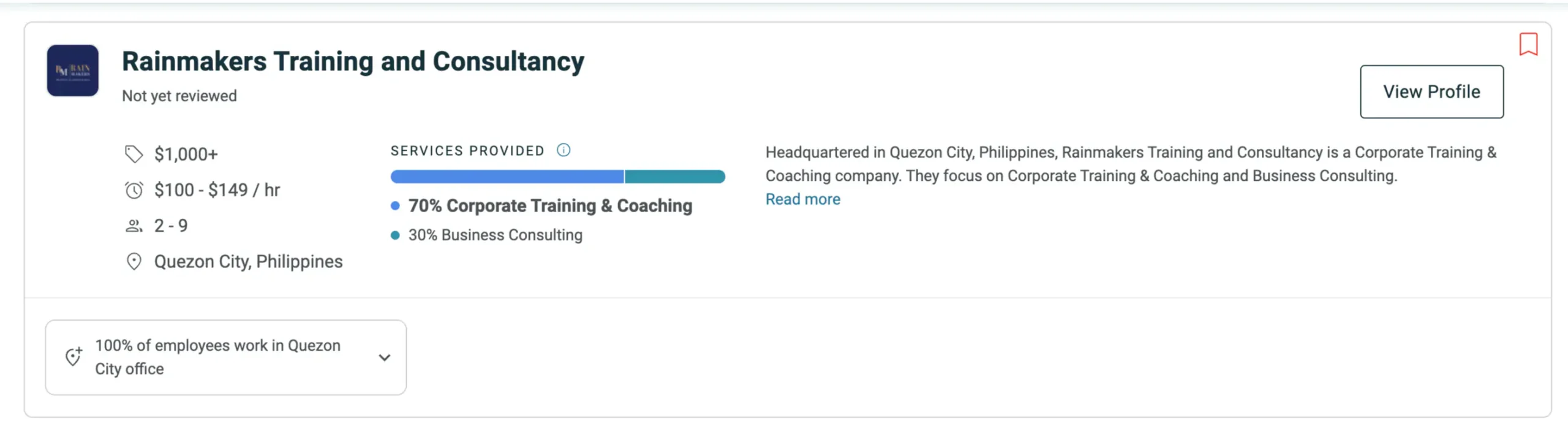 By simply creating detailed profiles on these new networks, your business can earn votes of confidence – links and even without (as LLM and search engines can detect the significance of your brand), helping improve search rankings and improve brand trust.
You’ll have to find professional-grade platforms that differ from other standard user-generated content, and authoritative link opportunities you can get from:
- Crunchbase, a platform for startups and investment tracking, though its links are no-follow, they still contribute to the diversity and naturalness of your link profile.
- Clutch – a high-authority B2B ratings and reviews platform where service providers can list their brands – I used this for the majority of my B2B startups. Clutch links are business profile links that can help establish your authority within the industry and get you a position in list rankings on AIO.
- Association websites – trade associations and professional organizations will help bring gold standard links for your local or niche websites, as they tie your business to a geographic or professional group.
The strategy is pretty straightforward: create and optimize profiles by including detailed information about your services, milestones, credibility, and expertise.
Final Thoughts
Building easy backlinks isn’t fundamentally just that easy – as a shortcut, but rather a strategic construction of your website’s foundational nodes. And by securing more initial trust signals, you reduce the informational retrieval cost for search engines, helping them establish your brand as a verified entity within your specific niche.
Whether you’re aligning your brand with NAP data across directories or reclaiming unlinked brand mentions, you’re building a digital footprint that will prove the legitimacy of your business to both Google’s algorithms and modern AI models.
Written By

Reviewed By

Sef Gojo Cruz
COO at SharpRocket, overseeing end-to-end operations, from crafting link building strategies to leading high-performing teams. Previously led SEO initiatives at Workhouse, a digital agency in Australia, and Keymedia, a real estate media company based in New Zealand.