We’ve all been there: you open your Ahrefs dashboard for an SEO routine check, expecting to see steady growth, only to be met with a jarring red arrow. Your domain rating (DR) has dropped — perhaps by two or four points — yet when you look into your “Lost Backlinks” report, you only find a single domain that has just disappeared.
Sometimes, it feels like a glitch. How can Ahrefs DR dropped due to losing one link? Does it carry enough weight to drag down the perceived authority of your site’s entire link profile — in other words, your digital ecosystem?
The reason for this drop is rarely a Google penalty or a sign that your website is completely failing; it is sometimes rooted in the fundamental way Ahrefs has actually built its map of the internet.
In this guide, we’ll give you the mechanics of this “single-link drop”, and help you diagnose if the loss you have actually matters to your Google rankings, and share a quick roadmap to stabilizing your domain authority so it never feels this fragile again.
Table of Contents
ToggleThe Mechanics of the “Single Link” Drop
We have to look under the hood of Ahrefs’ math. It isn’t a bug in their system, but rather just a feature of how they calculate authority. Here are three primary reasons why a single backlink can hold the key to your entire domain score.
1. The Logarithmic “Tipping Point”
Simple truth: DR is a relative logarithmic scale, not an absolute score. This means that, unlike a typical test score out of 100, where losing just one point means you got one question wrong, Ahrefs DR works differently, as it measures your standing in a massive, shifting data.
Another way to look at it is like the Richter scale of earthquakes or levels in a difficult video game. For example, moving from DR 10 to 20 requires a relatively small amount of link juice, while moving from DR 70 to 80 requires an astronomical increase in authority.
2. The “Power Pillar” Concept
Not all backlinks are created equal. In a healthy backlink profile, authority is actually distributed, but for many growing websites, the profile is “top-heavy”.
Let’s say you have 100 links from small blogs (DR 10 to 20) and one link from a powerhouse publication like the New York Times or TechCrunch (DR 90+), that single link alone might be responsible for 70% of your total DR score. So, if that Power Pillar link disappears suddenly for many reasons, such as the article being deleted or a broken redirect — your Ahrefs DR may start to drop.
3. The Neighborhood Effect (Relative Competition)
This is the part most people miss in SEO: DR is a relative metric. So, Ahrefs compares your link profile against every other website in its multi-billion-page index.
Imagine you are in a race. You are running comfortably at a steady pace, but you trip and slow for one second (your lost link). Meanwhile, a thousand other runners just hit a sprint (they gained new quality links). Even though your effort only dropped slightly, your position in the pack drops significantly. So, if the average authority of your web increases and your site stays the same or even loses a tiny bit of ground, your Ahrefs DR will be adjusted downward to reflect your new standing in the pool of link profiles.
How to Identify Your “Type” of Backlink Loss
Not every lost link is an intentional move by an editor or webmaster to remove you. Sometimes the link is still physical there, but Ahrefs has stopped counting it. To see what really happened, head to the Backlinks > Lost report in Ahrefs and look at the “Reason” column.
1. Clean Removal (The Human Factor)
This is the most straightforward loss. The webmaster, writer, or editor actively went into their CMS and deleted your link.
They may simply be auditing their old content, pruning what they consider irrelevant, improving their own link juice retention (by not giving any external links to other publishers), or perhaps finding a newer, more relevant resource to link to instead.
2. Technical Loss (The 404/301 Factor)
Links are gone (404 pages). If you deleted a page or changed its URL without 301 redirecting it, any URL now links to a dead page.
Ahrefs may also experience a timeout or a 5xx error when trying to crawl the linking page.
3. The “Dilution” or Devaluation Loss
This is the stealth reason for an Ahrefs DR drop. The light might still be there, but its link value has lost.
For instance, if the website linking to you adds a noindex tag to their page, that page (and the link) effectively disappears from the authority map.
Another scenario would be if the page linking to you suddenly adds 200 other outbound links (which opens the floodgates to other guest posts), the link equity sent to you is diluted to a fraction of what it once was.
4. The “Ghost” Loss (Ahrefs Recrawl)
Sometimes, Ahrefs reports the link as lost because it simply hasn’t recrawled that specific page in a few months. And when it finally does, it realizes that the link was actually removed a long time ago. This can cause a delayed drop in Ahrefs DR, where you lose authority for a link you actually lost six months prior.
How to Recover and Stabilize Your Ahrefs DR After Losing a Single Backlink
If your SEO audit reveals that the loss was significant and that you want to prevent any fragility in your DR, you can follow these recovery steps to regain your footing.
Step 1: Audit Your Links Manually
Don’t take the Ahrefs dashboard at face value. Tools are actually based on crawls, and crawls can be delayed or misinterpreted.
Go to the source URL. See if the content is still there. Sometimes, the webmaster moves a post to a new category, and the link loss is just a temporary reporting lag.
Right-click the webpage and select “View Page Source”, see if your domain is included. If your backlink is still in the code but Ahrefs says it’s lost, Ahrefs bot simply hasn’t successfully recrawled it yet. No action is needed for this.
Make sure the page they are linking to is still live. But if you find a 404 error, you can set up a 301 redirect to the new version of that page.
Step 2: Reclaim Lost High-Quality Links
If your link is relevant and high-quality and you’ve confirmed it was removed manually, you can get it back by reaching out to the editor.
Don’t be aggressive or accusatory. Send an email to persuade the editor and have the angle of like a link removal as a potential oversight or an opportunity to provide something better.
Here’s an email semi-template you can use:
“Hi [Name], I was reading through your piece on [Topic] and noticed the link to our [Resource Name] was recently removed. We actually just updated that guide with fresh 2026 data and new insights. Would it be more valuable for your readers to have that updated version linked instead?”
Step 3: Patch Your Internal Linking Structure
Compensate for lost inbound/external link equity by better distributing the authority you already have.
Go to Ahrefs’ “Best by Links” report for your domain to see which pages have the most link juice.
Then, add a fresh contextual link from one of your high-power pages to the page that just lost its backlink. When you do this, you recirculate your existing authority, signaling crawlers that the page is still a high priority.
Step 4: Diversify Your Backlink Profile
Relying on just one or two unicorn links makes your SEO standing fragile. You actually need to broaden your base.
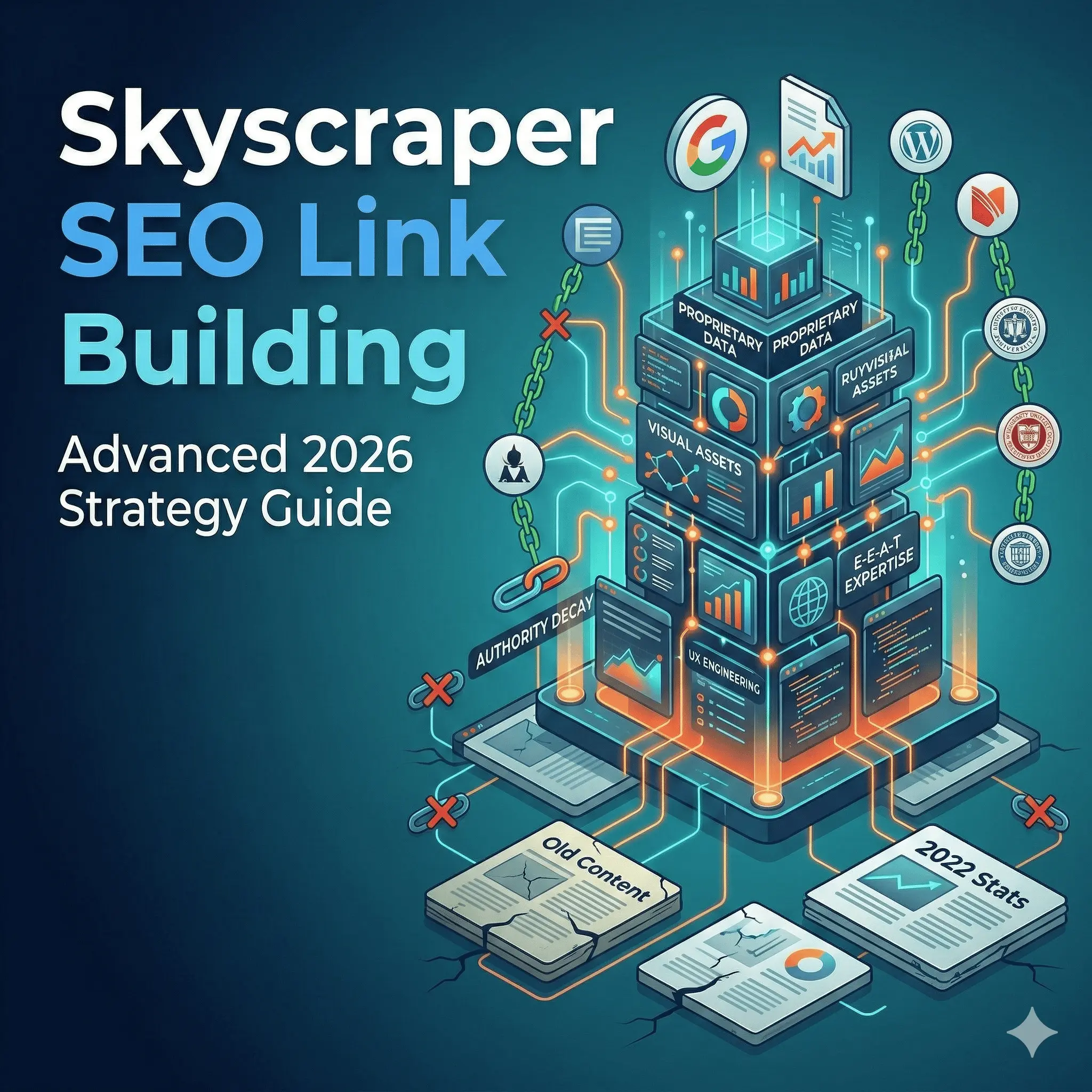
Diversify your link profile. Focus on other mid-tier links (DR 30-50), not just authoritative ones. A link profile supported by many medium-sized link pillars is much harder to topple than one held up by a single skyscraper-type link.
When you have a diversified link authority, losing one link becomes a minor blip rather than a site-wide crisis.
Final Thoughts: Focus on the Brand Metrics That Matter
Ahrefs Domain Rating is a helpful compass in measuring relative search growth, but it is not the ultimate destination for your SEO strategy — it is a proprietary third-party metric designed to estimate domain authority.
In the AI-driven world we have, brand impressions, mentions, and strong affinity to the brand – exposure and engagement, matter more than just having a single DR link.
If you’re looking for ways to improve your brand metrics (brand impressions, mensions, and engagement) using link building, you can check out our link building packages.
Written By

Venchito Tampon
Founder of Link Building Services IO and CEO and Co-Founder at SharpRocket, a link building agency. With a decade of experience, Venchito has a proven track record of leading hundreds of successful SEO (link builidng) campaigns across competitive industries like finance, B2B, legal, and SaaS. His expert advice as a link building expert has been featured in renowned publications such as Semrush, Ahrefs, Huffington Post and Forbes. He is also an international SEO spoken and has delivered talks in SEO Zraz, Asia Pacific Affiliate Summit in Singapore, and Search Marketing Summit in Sydney, Australia.
Reviewed By

Sef Gojo Cruz
COO at SharpRocket, overseeing end-to-end operations, from crafting link building strategies to leading high-performing teams. Previously led SEO initiatives at Workhouse, a digital agency in Australia, and Keymedia, a real estate media company based in New Zealand.