One of the core principles of link building is having trusted entities vouch for your website. Your site can benefit from authority transfer and more entity validation, strengthening its rankings and visibility on AI-generated answers.
That said, one type of link you should aim for that is powerful and authoritative is a .gov backlink. Given that government websites rarely link to private companies or any external organization unless there’s a valid reason and a real, verifiable connection, you may consider them as hard-to-replicate links.
Gov backlinks aren’t easily acquired – they are usually earned, not bought. Unlike other types of links and even .edu links (where many outdated link-building techniques have made it scalable to get the kind of links – i.e., scholarship link building for .edu domains), you can’t shortcut your way in getting gov backlinks.
Essentially, you need ethical ways focused on building genuine relationships and investing in mission-driven link-building campaigns so you can show mutual benefit and trust, which will result in actual natural links. Let’s discover how to get gov backlinks.
Effective Strategies to Get .Gov Backlinks
Here are a couple of strategies you can try to acquire gov backlinks.
1. Local Business and Government Directories
One of the most reliable techniques (initial entry points) for gov backlinks is getting your company listed in official business directories – state, federal, or municipal.
These are maintained by government entities, giving more information on the licensed service providers, businesses, and contractors they work with or approve of.
You don’t compare it to a generic business directory, as government directories are trusted databases of legitimate organizations. Being part of one is an entity validation signal.
Here are examples of legit government directories in the U.S.:
- SAM.gov (System for Award Management – federal registry responsible for validating businesses eligible to contract with the U.S. government) displays a public profile that typically includes a website link and a business description.
- USA.gov Business Resources aggregates verified state and local businesses, usually with links to regional portals.
- State Secretary of State Business Search Portals (e.g., sos.ca.gov, sos.nv.gov) publish searchable databases of registered organizations and entities with links to their websites or contact fields.
- Local city and country economic development websites (i.e., nyc.gov/business, chicago.gov/business) display public lists of licensed vendors, community partners, and minority-owned businesses.
- Federal Procurement Data System (fpdsgov.gov) and Grants.gov Award Listings – these sites have references to approved supplies and partners, usually with external links to respective entities.
Getting a directory link (being included in those sites) involves registering your business formally with the appropriate state agency and getting a unique ID (e.g., EIN, CAGE Code).
Complete any needed vendor registration profiles and include your official website URL (this is where you get the juicy gov backlink). Then, check your published entry to see if your backlink is active and visible.
2. Public Programs and CSR Collaborations
Another way to acquire government backlinks is to partner with agencies (local, state, or federal) on initiatives like community or public-interest projects.
It’s great to demonstrate helpfulness within your target community while earning government backlinks (as by-products of your work). Often, government sites document these types of projects through press releases, reports they send to stakeholders, or their own program pages, which naturally include links or brand mentions (potentially to their partners—including yours if you do this).
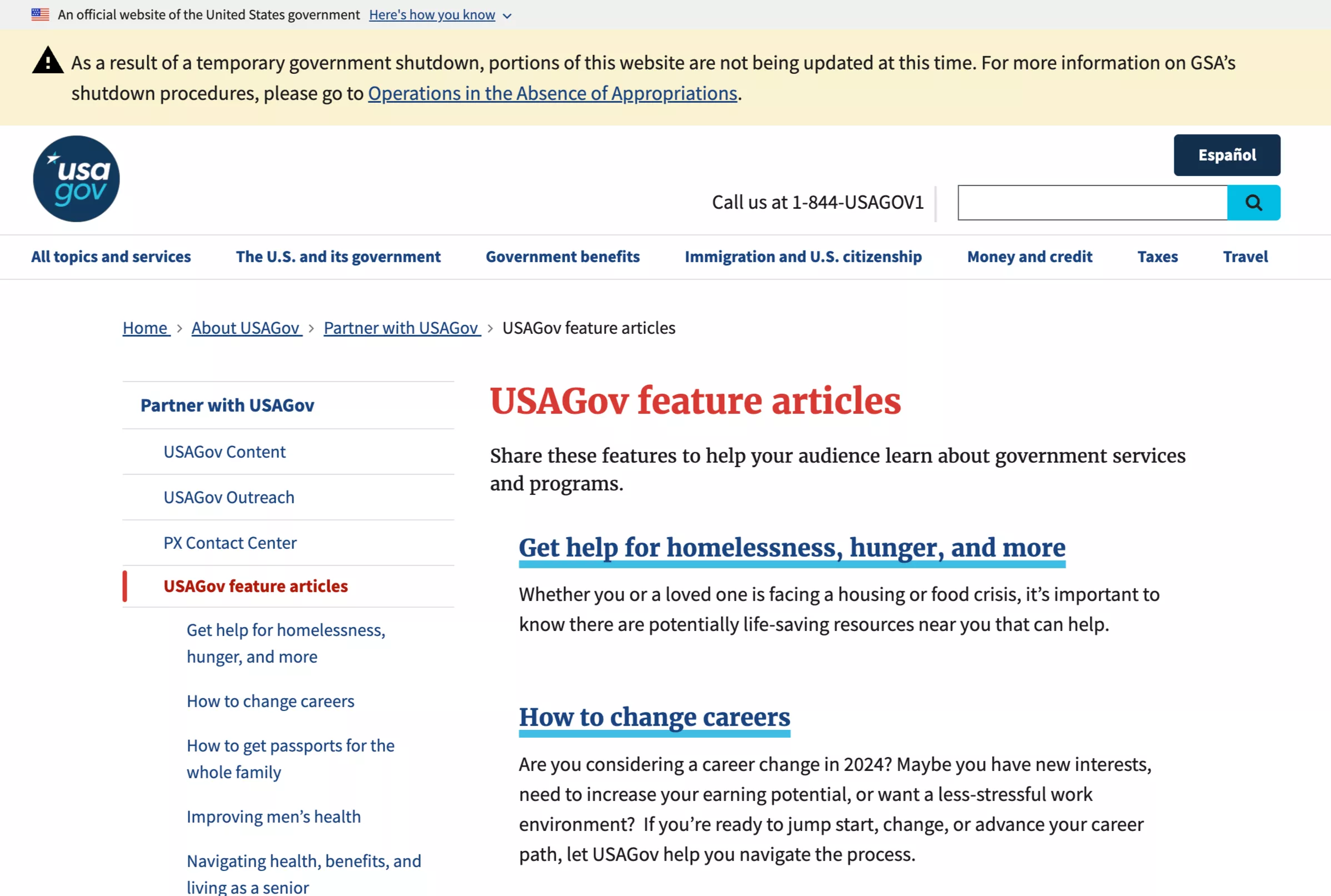
Here are a couple of examples of public program initiatives that can lead you to earn .gov backlinks:
- Environmental and sustainability programs—simply partnering with the U.S. Environmental Protection Agency (EPA), state Departments of Environmental Quality, or even local public works departments for things like cleanup drives, recycling community initiatives, or emission-reduction projects—many of these agencies publish press releases or results from their community works.
- Community and small-business initiatives – choose to work with SBDC or state economic agencies (i.e, business.usa.gov, sba.gov, commerce.state.md.us) – they typically showcase business success stories or any partnerships in the community with outbound links to partners.
- Education and workforce training: Initiate supporting programs like Apprenticeship.gov, Workforce Innovation and Opportunity Act, or any labor training partnerships, where your business can help with their job fairs, free mentorship, coaching, or skills training programs.
- Public-health campaigns: Partner with county health departments on programs like awareness or prevention events. Like others, they have press releases and summaries of programs with acknowledgements and links to sponsors or community partners. You can also check our guide on how to get links using events.
To get started with this gov backlink strategy, identify which public program is relevant to your business mission and for which you have sufficient resources.
Reach out to any local or state agencies for that specific public information program and ask about any requirements or things you need to do to become a partner.
Contribute real resources including your expertise, funding, or even manpower to support that partnership. Once you’ve initiated the initiative, make sure you document the output, either through media coverage or press releases.
3. Open Data and Resource Contributions
Launching content-led link building campaigns is an effective way to provide both perceived and tangible value to other publishers – and in this case, to government agencies.
Many state, federal, and local agencies are looking for external studies and verified datasets to emphasize, support, and add more credibility to their policy documents, reports, and public education pages.
So, when your site publishes highly credible, topically-relevant, and with an applied EEAT (Experience, Expertise, Authoritativeness, and Trustworthiness) approach to content making it certainly link-worthy, you can create content assets that will attract natural links from gov sites.
Here are a couple of samples where there are opportunities for resource contribution or link attraction to your content assets:
Economic and business research
These include market or employment data that could be referenced by the U.S. Bureau of Labor Statistics (BLS), U.S. Census Bureau, or SBA. For instance, if you are a private analytics firm, you can publish business research on Small Business Employment Trends that a local government website can later cite.
Environmental and energy studies
You can share data about sustainability, waste management, or energy efficiency. Agencies like the EPA (Environmental Protection Agency) often reference external reports that will complement any public initiative. It’s a good content theme for renewable energy brands or any niche related that can publish datasets on solar adoption rates – more likely to be linked to by DOE programs or related gov websites.
Public-health and community research
Contribute local datasets about wellness, nutrition, or healthcare access so you can naturally acquire links from county and state departments—especially when they’re developing community reports for their audience. For instance, if you’re in anything health-related, you can publish solid assets on a nutrition access report that can potentially be cited by county public health departments as part of their annual community assessment.
Transportation and urban development data
Another link-worthy content theme revolves around traffic trends, housing data, or infrastructure innovation – as many local planning commissions often link to credible research assets from external organizations – so if you have one, it’s a good place to build momentum for link building.
With the best of your ability, you start identifying relevant agency focus areas – niche down first so you can see which content theme fits your brand.
Then, publish a report or dataset on your website in easily downloadable formats, such as CSV, PDF, or Google Sheets.
Create a content distribution plan around press releases and organic email outreach to relevant agencies, highlighting insights and how the data can help support their public goals.
Building Real Authority Through Government Trust
Getting .gov backlinks can help you elevate your brand and topical authority, as they are a real-world validation of your work.
That means focusing on real connections, mission-driven campaigns, and helpful content that provides measurable public value to the different government sites you want to target. Again, it’s not just about gaining any SEO benefit—it’s about joining an ecosystem of credible entities.
If you need help building real authority with natural backlinks, explore our link building services.
Written By

Reviewed By

Sef Gojo Cruz
COO at SharpRocket, overseeing end-to-end operations, from crafting link building strategies to leading high-performing teams. Previously led SEO initiatives at Workhouse, a digital agency in Australia, and Keymedia, a real estate media company based in New Zealand.